






An Artist’s Woodland Escape
Interview with Yvonne Pepin-Wakefield
Photography courtesy of Yvonne Pepin-Wakefield
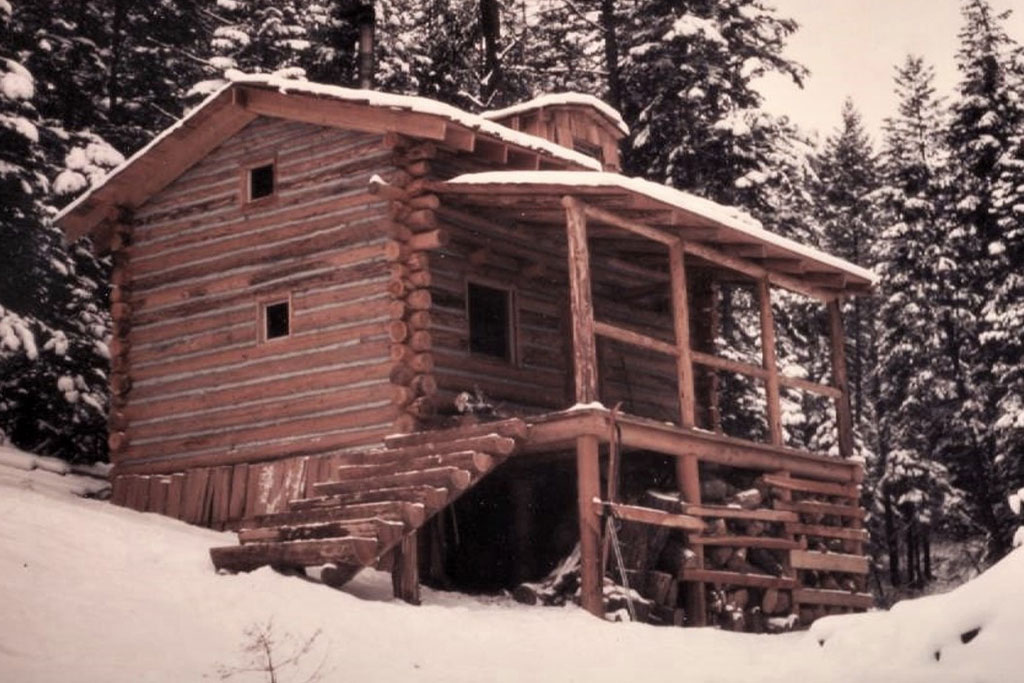
At just eighteen years old, Yvonne Pepin-Wakefield packed up some survival and building supplies and trekked into the Oregon woods with one goal: building a cabin from the ground up that would become a peaceful retreat and the site for crafting her artwork.
Now sixty-eight and an accomplished artist and author with a showcase studio, she shares the fascinating story behind this ambitious project—along with the impact it has had on her career.
What inspired you to construct a cabin by yourself?
I lost both my parents as a kid. The night my mother died, I was fourteen and sleeping in my cousin’s basement. I didn’t know where I was going to be living the next day, much less the next year, and I just decided that if I made it to adulthood, I was going to get a van, a cat, and a case of wine, go buy some property, and build myself a home where I could write poetry and paint. This idea got me through some pretty tough years. So when I turned eighteen and received my parents’ inheritance, I used it to buy eighty acres of property in the wilderness in Oregon.
Was this your first time taking on such a project?
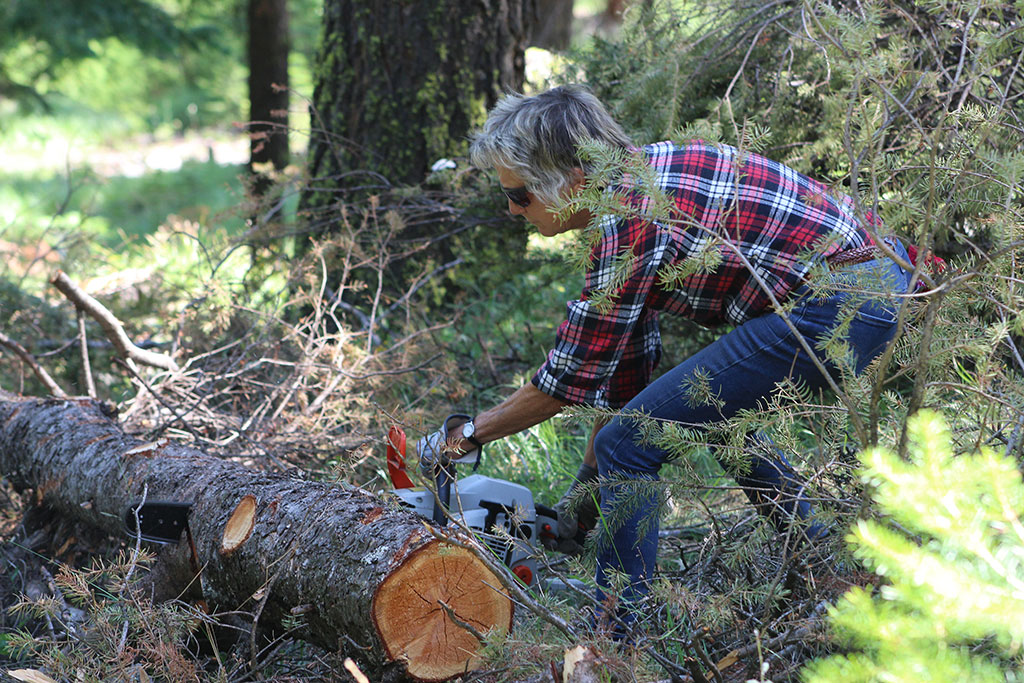
Yep—I had no design experience or background. The only thing I had ever built was a kid’s fort, and I broke my finger using the hammer. I found books on how to construct a log cabin and went up to the property to get started, but when I first tried to cut down a tree, it fell the wrong way. I knew I needed extra help, so I hired a builder named Jim from the nearby town, who basically taught me everything I know.
How did you approach the building process?
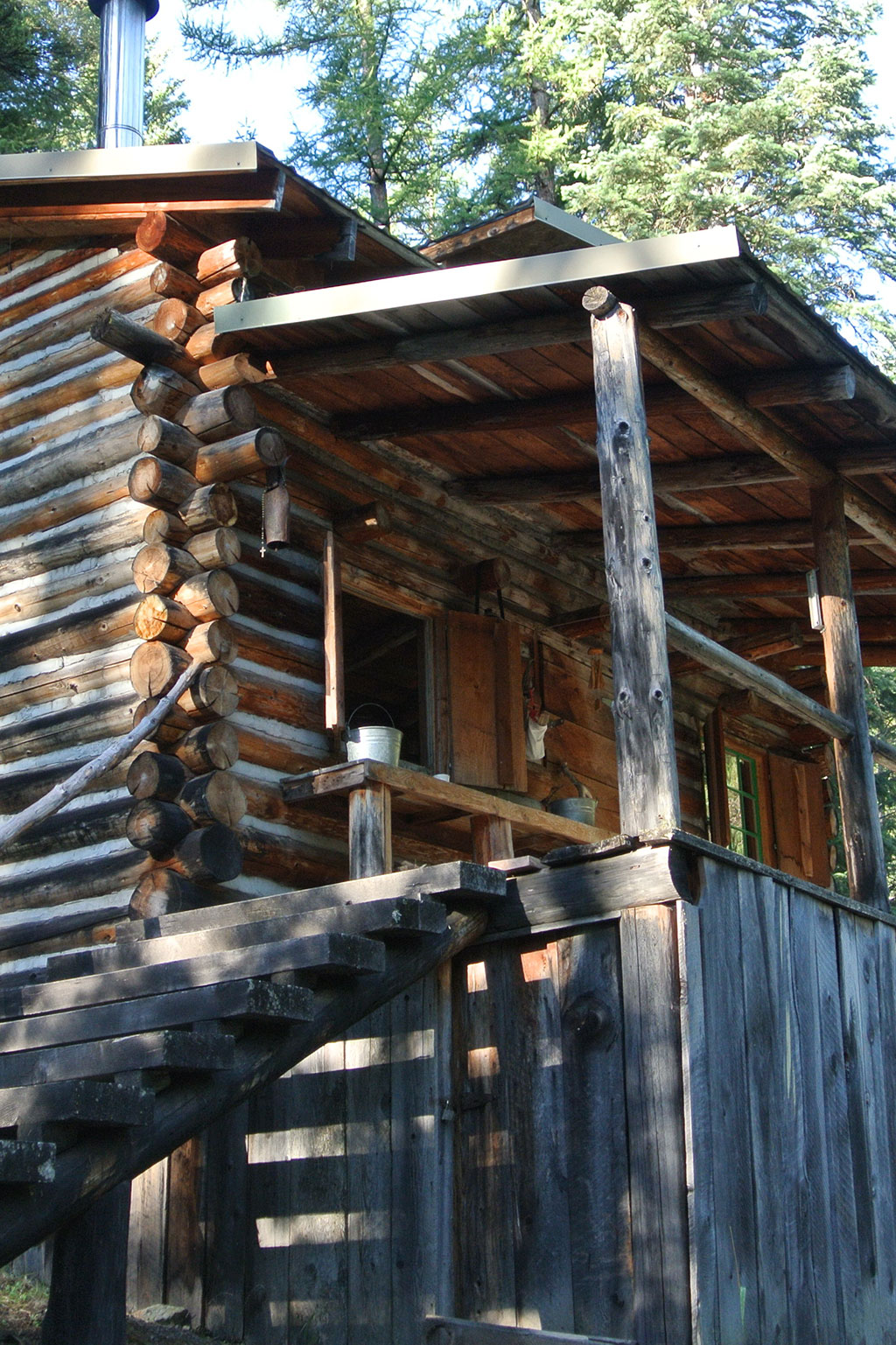
I manifested the idea of the structure and diagrammed the plans using rulers to scale the drawing. That detailed pencil sketch is what guided Jim and me. As for the building, we approached it primitively: the only power tool we had was a chainsaw. Jim would fell the trees and cut them to size, and I would drawknife them to make them smooth and compatible for building. The cabin has a post-and-pier foundation; I hand-dug sixteen post holes about two and a half feet down, poured cement in each one, and put a piece of rebar in the cement. I then drilled a hole into the ends of wooden posts to slide them onto the rebar so they could lift the cabin. From there, we laid logs for building the cabin floor, followed by the walls. After we finished the structure, I brushed on a wood preservative made from raw linseed oil and turpentine to protect it.
How has the cabin held up since then?
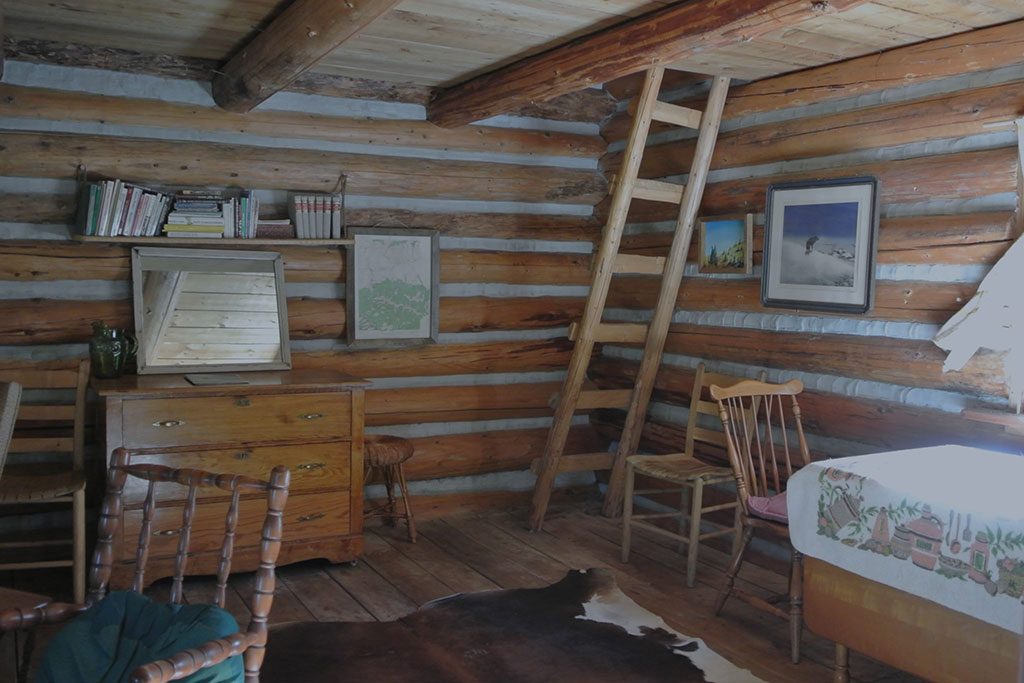
It’s about fifty years old now, and it’s still in really good shape, mostly because I maintain it very well. It’s like an organism; I have to work to keep it alive or it will go back to where it came from.
I make improvements from time to time too. For example, we originally put in only four windows to prevent heat from leaking. But my first winter there, it was too dark. For more light, I ended up adding two more large windows, which was quite a task. I had to chisel out the logs and hacksaw out the rebar that’s installed in every foot to hold them before taking a chainsaw and cutting the apertures for the windows. So here’s a message to anyone who wants to build a log cabin: plan ahead.
I also put in new steps recently. I’m more cautious now because of two hip replacements, but I’m still doing the same work and using the same tools that I did as a teen.
It sounds like there were many challenges during construction, but what was the biggest one?
During construction, I lived in a shack and later a pup tent without electricity or plumbing. When the road got bad because of the weather, I backpacked in supplies. It was a full-time job to stay warm and fed.
It ultimately took about seven months before I could move in; we had to make sure it was a safe shelter, especially because it was late October and snow was coming soon. Today, when I use it as my studio, I lug water out of the creek with buckets and keep myself warm at night with kerosene lamps. I spent the first winter there and went back every summer for about three months each; now I spend a few days at the cabin twice a month.
How has the cabin helped your art over the years?
At the time I built the cabin, I had taught myself drawing, but once the construction process no longer occupied my time, my paintings started to evolve. I would backpack around the wilderness and set up my French easel to paint scenes like the setting sun or full moon.
I took up ceramics long afterward. I use a pit-fire process where I bisque the clay in a kiln and then bury it underground and layer it with sawdust. I light it on fire, and it burns for up to ten days, which develops a beautiful patina on the vessel; it varies based on the heat, smoke, and sawdust I use each time. I also recently built a studio and gallery in The Dalles, Oregon, where I showcase my work. My cabin is two hundred miles away, but I still go there to maintain it, paint on location, and remind myself of my foundation.
For more info, visit yvonnepepinwakefield.com
2607 Views
Related Posts




Popular Posts