





Masterpieces in Ice
Alaska is known for many things, but perhaps the most notable is its majestic glaciers—there are over 125 times more of them here than in the rest of the United States combined.
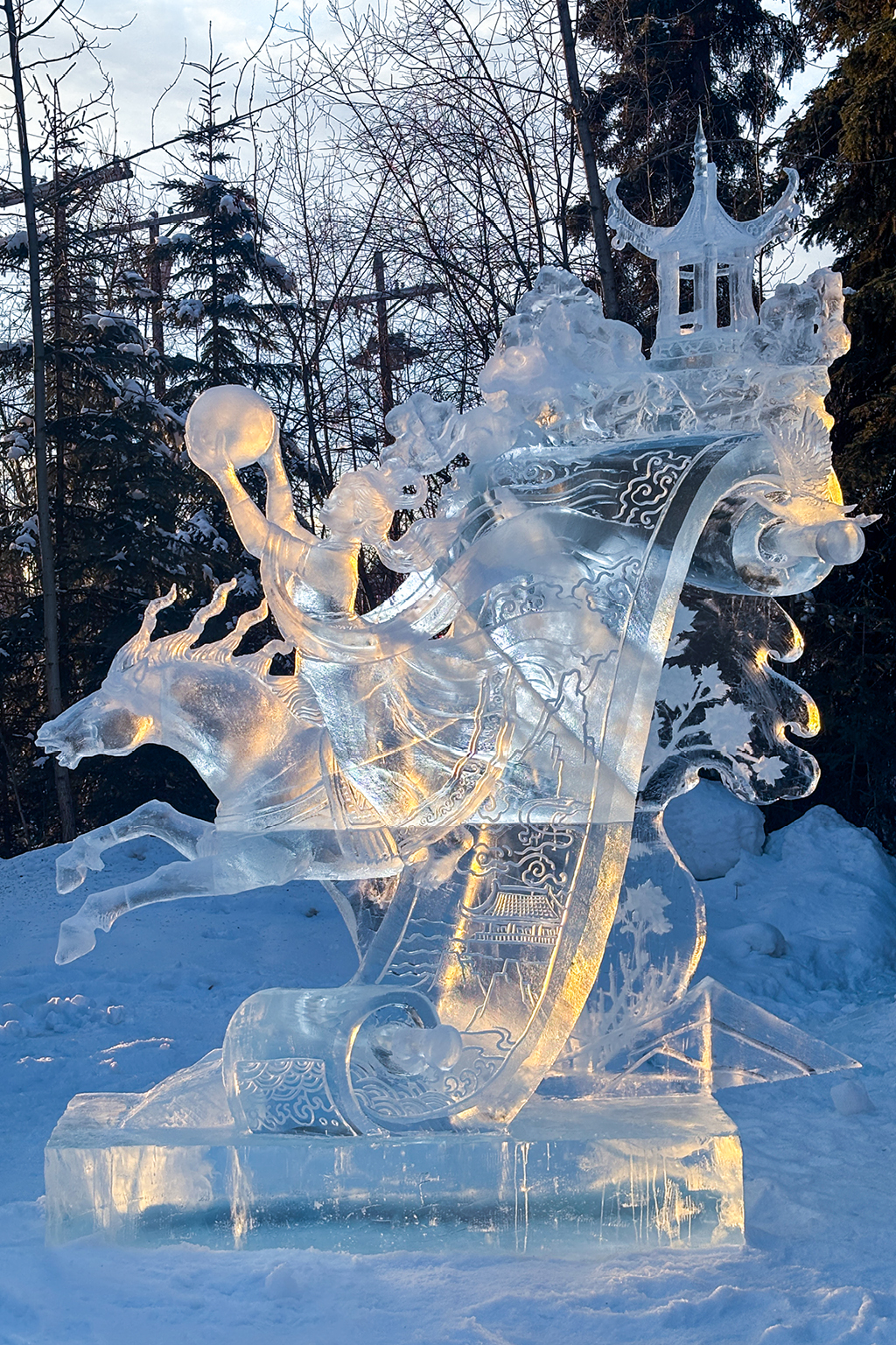
It’s no wonder, then, that the state welcomes carvers from around the country and across the globe to its World Ice Art Championships in Fairbanks every winter. With just one look at the dedication and artistry on display, you’ll understand why the event means so much to so many.

An Ice History
Though humans have been harvesting and molding ice for millennia, the first elaborate ice sculpture wasn’t created until 1740, when Russian empress Anna Ivanovna commissioned an entire palace of ice. Around a century later, ice manufacturing for public consumption began, and in 1892, the first modern ice sculpture—a swan used to display a dessert—was credited to French chef Auguste Escoffier.
As for Alaska specifically, ice sculpting has been a sport of sorts for decades. Since 1990, the governing body Ice Alaska has held the World Ice Art Championships in February and early March. Most artists are from America, but through the years, representatives from over fifty countries, from Latvia to Japan to Australia, and all seven continents have entered. In total, over 100 competitors and 45,000 visitors descend on Fairbanks for the occasion, with the former utilizing over 1.2 million pounds of ice to create truly incredible works of art.

The Championships
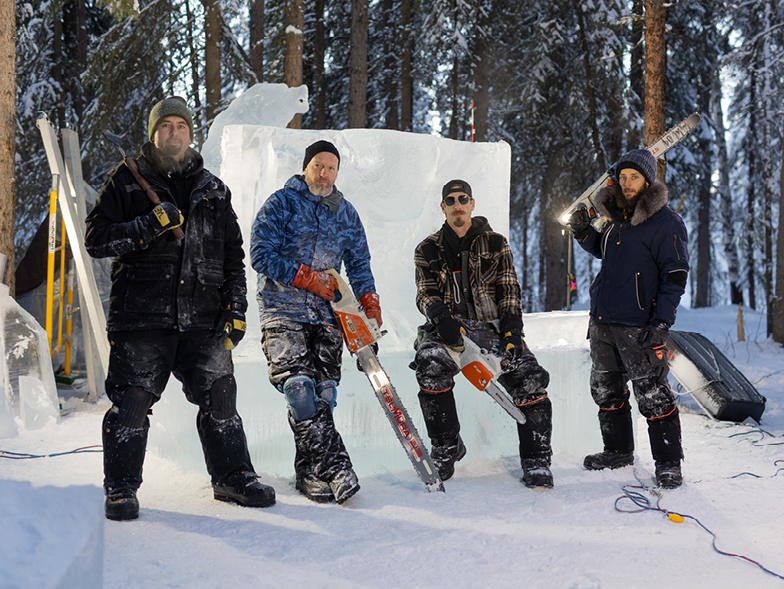
Participants can choose from three categories depending on the number of people involved and blocks they use: single-block (one person carving one block), double-block (two and two), and multi-block (a team of four and nine blocks). And they don’t just show up and carve—ample steps must be completed beforehand. They arrive two days before their respective events and check in to the competition by the next afternoon. Afterward, they attend a safety meeting, do their site setup, and submit their designs and sculpture names.
Then it’s game on. Over the course of six days for multi-block teams and three days each for double-block and single-block ones, the carvers craft their masterpieces. Amazingly, they can do their work at any time day or night—a potentially daunting proposition, considering that Fairbanks’s average low during the latter is below zero.
They can use as many tools as they like, with the most popular being chain saws, die grinders, heat, chisels, and aluminum plates. In short, they are limited only by their imagination.
Upon conclusion of the competition, the sculptures (some of which weigh over 20,000 pounds) are graded by a three-person judging panel based on ten equally weighted criteria. These include initial impression; originality, creativity, and artistic intent; degree of difficulty; advanced techniques and craftsmanship; utilization of ice; and overall impact. A total purse of around $45,000 is divvied up between the categories, with a first-, second-, and third-place winner named for each. In addition, some carvers dare to be in all three, and the one who earns the highest cumulative score is crowned the Champion of Ice. Ice Alaska holds other events during this time as well, including a novice challenge, family snow-sculpting competition, and youth classic.
But that’s not all that takes place. The championships are the centerpiece of the six-week Ice Alaska Winter Carnival, which offers even more for people to enjoy. For example, there’s a kids park that features community-created snow sculptures and an outdoor gaming area. Here, guests can do just about everything imaginable on ice, such as going down slides and playing checkers, table tennis, and miniature golf.
Beyond the Ice
The World Ice Art Championships is a labor of love for not only the contenders but also those who help organize it each year. “The heart of this event is the many volunteers, from the board of directors that plans for it year-round to those who prepare the park to the office heroes who do all the unsung work,” says Leigh Anne Hutchison, a member of Ice Alaska’s board of directors and its secretary. “Everyone is important here—it is a truly symbiotic endeavor, with each person doing their job to make it happen.”
In the end, there’s a common denominator found in Fairbanks every winter among all those involved: fostering the wondrous and endless creativity of ice art that’s beloved across the globe. For Hutchison, it doesn’t get any better. “We love this art form, and we want to share it with our community and the world,” she adds. “People can communicate their feelings through this medium even if they don’t all speak the same language. Ice art is a unique combination of love, passion, and hard work—and that resonates with everyone who witnesses it.”
For more info, visit icealaska.com
3347 Views
Related Posts


Popular Posts